

Winter roofing tips in Colorado to protect your roof in cold weather include proactive inspections, proper insulation and ventilation, ice-dam prevention, and timely snow removal. Because Colorado’s high-altitude climate brings heavy snowfall, strong winds, and rapid freeze-thaw cycles, even small roofing issues can quickly turn into costly damage if they’re not addressed before and during winter.
This article explains why Colorado winters stress roofs, the best roofing materials for cold climates, and how to handle emergency repairs. It also includes a maintenance checklist and signs your roof may need replacement.
Why Colorado Winters Are So Hard on Roofs
Colorado’s winter climate combines extreme cold, heavy snowfall, and intense sun exposure, creating one of the most demanding environments for any roofing system. These conditions place constant stress on roofing materials and structural components.
- Heavy Snow Loads – Accumulated snow adds significant weight, which can strain roof decking and lead to sagging or structural damage.
- Freeze–Thaw Cycles – Melting snow refreezes in small cracks, causing shingles and flashing to expand, contract, and eventually break.
- Ice Dams – Uneven roof temperatures cause snow to melt and refreeze at the edges, forcing water back under shingles and into the home.
- High Winds – Strong winter winds can lift or tear off shingles, exposing the roof to moisture and further damage.
- High-Altitude UV Exposure – Colorado’s intense sunlight weakens roofing materials even in winter, speeding up wear and aging.
Because Colorado roofs face multiple extreme conditions at once, proper winter preparation and ongoing maintenance are essential to prevent leaks, structural issues, and costly repairs.

How to Protect Your Roof in Cold Weather in Colorado
Colorado’s winter weather can be unpredictable and severe, making proactive roof care essential for preventing leaks, ice damage, and costly repairs. Taking a few key steps before and during winter can help your roof withstand snow, ice, and freezing temperatures.
1. Schedule a Professional Roof Inspection
A professional inspection before winter helps identify loose shingles, cracked flashing, or weak spots that could allow water to enter. Fixing small issues early prevents them from becoming major problems once snow and ice arrive.
2. Improve Attic Insulation and Ventilation
Proper insulation keeps warm air inside your home instead of escaping to the roof and melting snow. Good ventilation allows cold air to circulate, keeping roof temperatures even and reducing the risk of ice dams.
3. Keep Gutters and Downspouts Clear
Clean gutters allow melting snow to drain off the roof instead of backing up and freezing. This prevents ice dams and protects both your roof edges and your home’s foundation.
4. Prevent Ice Dams
Sealing air leaks and installing ice-and-water shield under shingles helps stop water from backing up under the roof. These measures keep melting snow flowing safely off your roof instead of refreezing at the edges.
5. Remove Excess Snow Safely
Heavy snow can strain your roof and increase the risk of collapse or leaks. Using a roof rake from the ground helps reduce weight without putting you at risk.
6. Watch for Warning Signs
Water stains on ceilings, icicles along roof edges, or sagging areas can indicate a problem. Addressing these issues quickly helps prevent extensive interior damage.
7. Trim Overhanging Tree Branches
Snow and ice can make branches heavy and more likely to break during winter storms. Trimming them back prevents falling limbs from damaging shingles, gutters, or skylights.
8. Check and Secure Roof Flashing
Flashing around chimneys, vents, and skylights keeps water out of vulnerable areas. Cold temperatures can loosen or crack flashing, so securing it before winter helps prevent leaks.
9. Inspect and Seal Roof Penetrations
Any opening in your roof, such as vents or pipes, is a potential entry point for moisture. Making sure seals and caulking are intact keeps melting snow from getting inside.
10. Make Sure Your Roof Is Properly Ventilated
Balanced airflow prevents heat from building up under your roof and melting snow unevenly. This helps reduce ice dams and protects your shingles from temperature-related damage.
11. Plan for Emergency Repairs
Having a trusted roofing contractor lined up before winter ensures faster response if a storm causes damage. Quick action can prevent a small issue from turning into major interior water damage.
12. Schedule a Post-Winter Inspection
Once winter ends, hidden damage may still exist beneath the surface. A spring inspection catches issues early and helps extend the life of your roof.
Protecting your roof during a Colorado winter requires preparation, maintenance, and timely action. By following these steps, you can keep your home dry, safe, and well-protected through even the harshest cold-weather conditions.
Best Roofing Materials for Colorado Winters
Choosing the right roofing material is especially important in Colorado, where snow, ice, wind, and intense sun all take a toll on your roof. These materials are proven to perform well in cold, high-altitude climates.
- Asphalt Shingles – Modern architectural shingles are affordable, durable, and designed to resist wind, snow, and freeze-thaw cycles.
- Metal Roofing – Metal sheds snow easily, resists ice buildup, and lasts longer than many other materials in harsh winter weather.
- Impact-Resistant Shingles – These shingles are built to withstand hail and falling debris, which are common in Colorado storms.
- Synthetic Slate or Shake – These materials offer the look of natural roofing with better resistance to cracking, moisture, and temperature changes.
- Tile Roofing – When properly installed, tile can handle cold temperatures and heavy snow, though extra structural support may be needed.
- Standing Seam Metal – This system prevents water penetration and allows snow to slide off more safely than traditional roofing styles.
The best roofing material for a Colorado winter is one that resists moisture, handles heavy snow, and holds up to extreme temperature changes. Investing in the right material helps protect your home and extend the life of your roof.
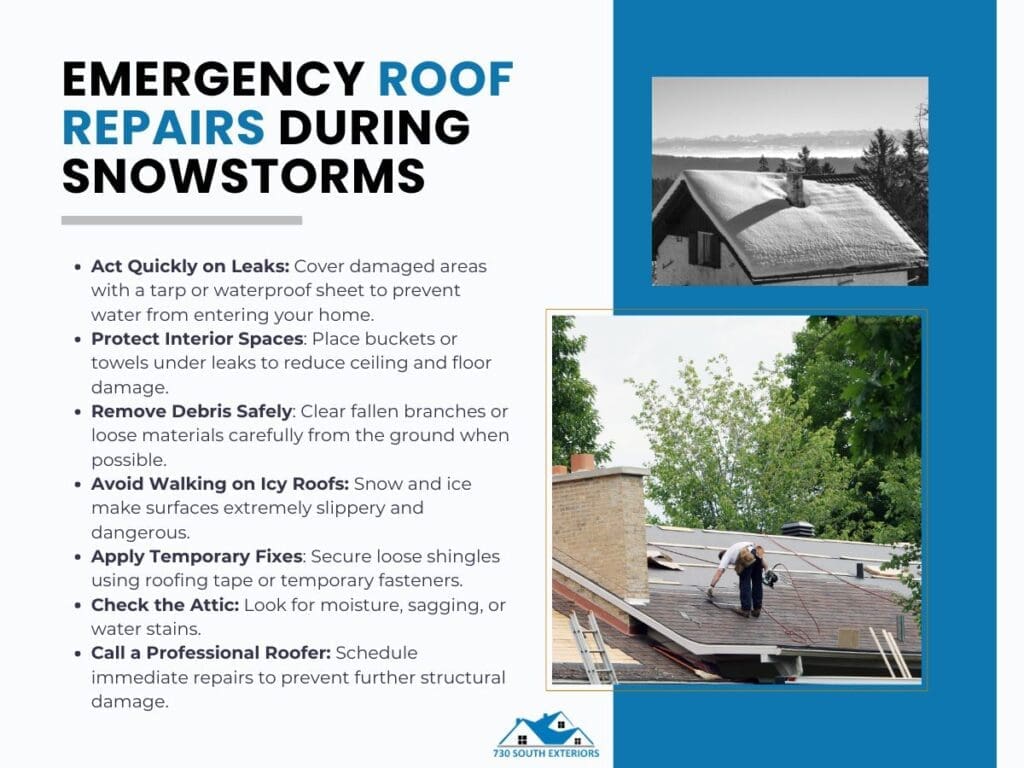
Emergency Roof Repairs During Snowstorms
Snowstorms in Colorado can cause sudden roof damage, from leaks to fallen debris, requiring quick action to prevent further problems. Knowing how to respond safely and effectively is key to protecting your home.
- Address Leaks Immediately – Use tarps or waterproof sheeting to cover holes and prevent water from entering your home.
- Remove Loose Debris – Clear fallen branches or other debris carefully to avoid additional damage or injury.
- Avoid Climbing on Icy Roofs – Ice makes roofs extremely slippery; use tools from the ground whenever possible.
- Temporary Shingle Replacement – Secure any loose or missing shingles with roofing tape or nails until professional help arrives.
- Check Attic for Water Damage – Inspect the attic for leaks or sagging areas and place buckets or towels to catch water.
- Call a Professional Immediately – For major damage or structural concerns, contact a licensed roofing contractor for safe repair.
Prompt and safe action during a snowstorm can minimize damage and prevent costly repairs. Preparing emergency materials and knowing what to do keeps your roof and home protected until professional help is available.
Winter Roof Maintenance Checklist for Homeowners
Proper roof maintenance during the winter months is crucial in Colorado to prevent ice dams, leaks, and structural damage. A proactive approach helps extend the life of your roof and keeps your home safe and dry.
1. Inspect Roof Shingles and Flashing
Check for cracked, curling, or missing shingles, as well as loose flashing around chimneys, vents, and skylights. Early detection of damaged materials prevents leaks and water intrusion during snow and ice accumulation.
2. Clean Gutters and Downspouts
Remove leaves, pine needles, and debris to ensure water can flow freely. Clear gutters help prevent ice dams and reduce the risk of water backing up under your shingles.
3. Monitor for Ice Dams
Look for icicles or frozen water along roof edges, which indicate potential ice dam formation. Proper attic insulation, ventilation, and ice shields can help prevent ice dams from causing water damage.
4. Trim Overhanging Trees
Cut back branches that could fall under the weight of snow or ice. This protects your roof from impact damage and keeps gutters from getting clogged.
5. Remove Excess Snow Safely
Use a roof rake to remove heavy snow accumulation while standing on the ground. Avoid climbing onto icy roofs, as snow weight can increase the risk of collapse and injuries.
6. Inspect Attic for Leaks
Regularly check your attic for water stains, mold, or sagging spots. Early identification allows you to address leaks before they worsen and cause structural damage.
7. Keep Emergency Repair Supplies Ready
Store tarps, roofing tape, and ladders for quick temporary fixes. Being prepared allows you to respond immediately to leaks or storm damage.
Following a winter roof maintenance checklist ensures your home stays safe and dry throughout Colorado’s harsh winter months. Regular inspections, snow management, and preventive care can save money and stress by avoiding major repairs.
Signs You Need a Roof Replacement Before Next Winter
Knowing when to replace your roof before winter in Colorado can prevent leaks, ice dam damage, and costly emergency repairs. Early replacement ensures your home stays safe and protected during harsh weather.
- Curling or Buckling Shingles – Shingles that are curling, buckling, or missing indicate they can no longer protect your roof from water and snow.
- Frequent Leaks – Persistent leaks despite repairs suggest the underlying roof structure is failing and may require full replacement.
- Excessive Granule Loss – If shingles are losing granules, it reduces their ability to resist UV rays and heavy snow, signaling aging materials.
- Sagging Roof Deck – A sagging roof indicates structural damage that could worsen under snow loads, requiring replacement for safety.
- Ice Dam Damage – Repeated ice dams causing interior leaks may mean your roof or underlayment is no longer effective.
- Age of Roof – Most roofs last 20–25 years; if yours is approaching this age, replacement before winter is recommended.
Recognizing these warning signs allows you to replace your roof before winter, protecting your home from water damage, structural issues, and costly emergency repairs. Acting early ensures peace of mind during Colorado’s harshest months.
Final Thoughts
Winter in Colorado presents unique challenges for homeowners, from heavy snow and ice dams to high winds and freeze-thaw cycles. By inspecting your roof, maintaining proper insulation and ventilation, and taking proactive steps like clearing snow and monitoring for damage, you can protect your home and prevent costly repairs.
Choosing the right roofing materials, keeping up with regular maintenance, and knowing when to call a professional for repairs or replacement ensures your roof stays strong through the coldest months. With these strategies, you can face Colorado winters with confidence, knowing your home is safe, secure, and well-prepared.